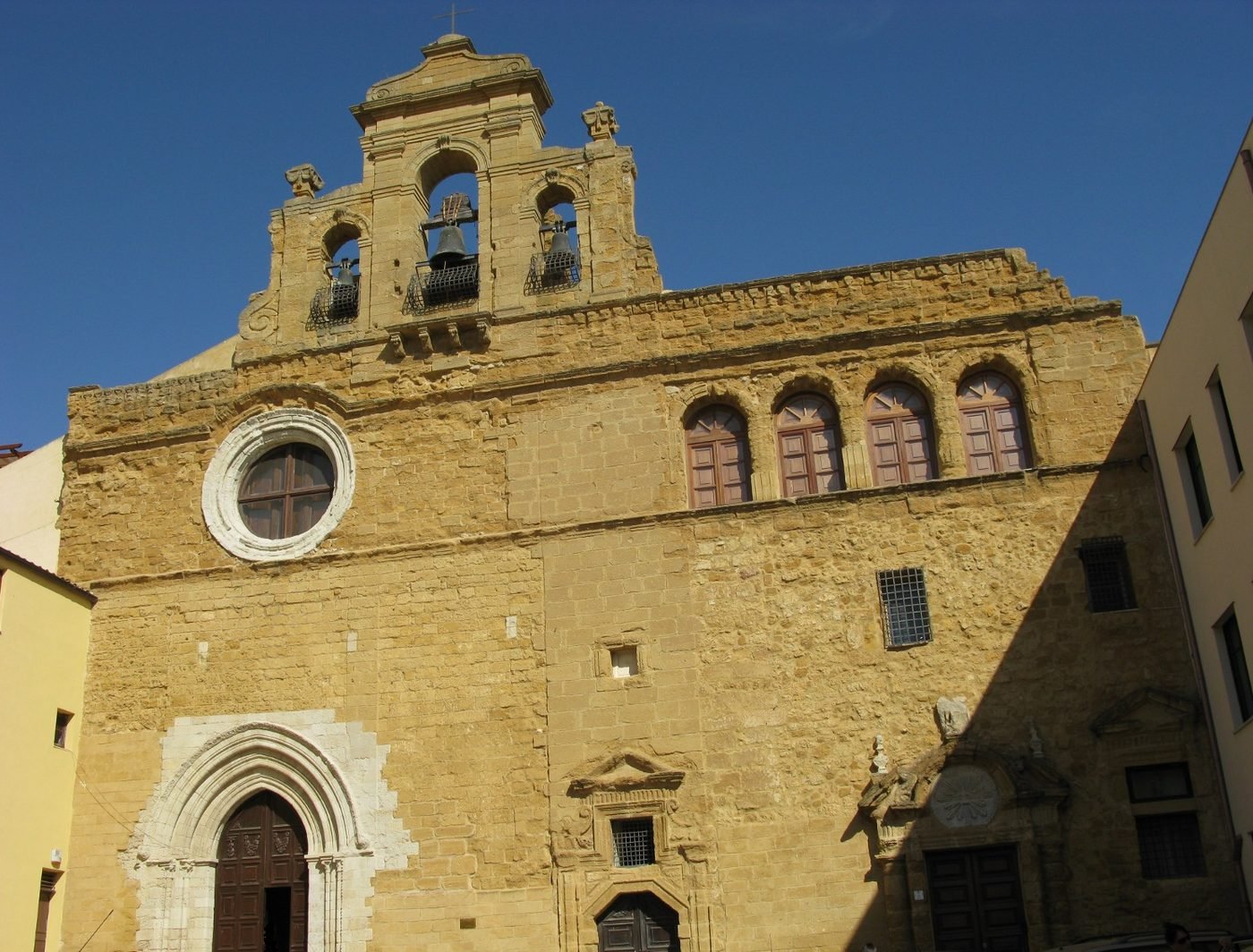
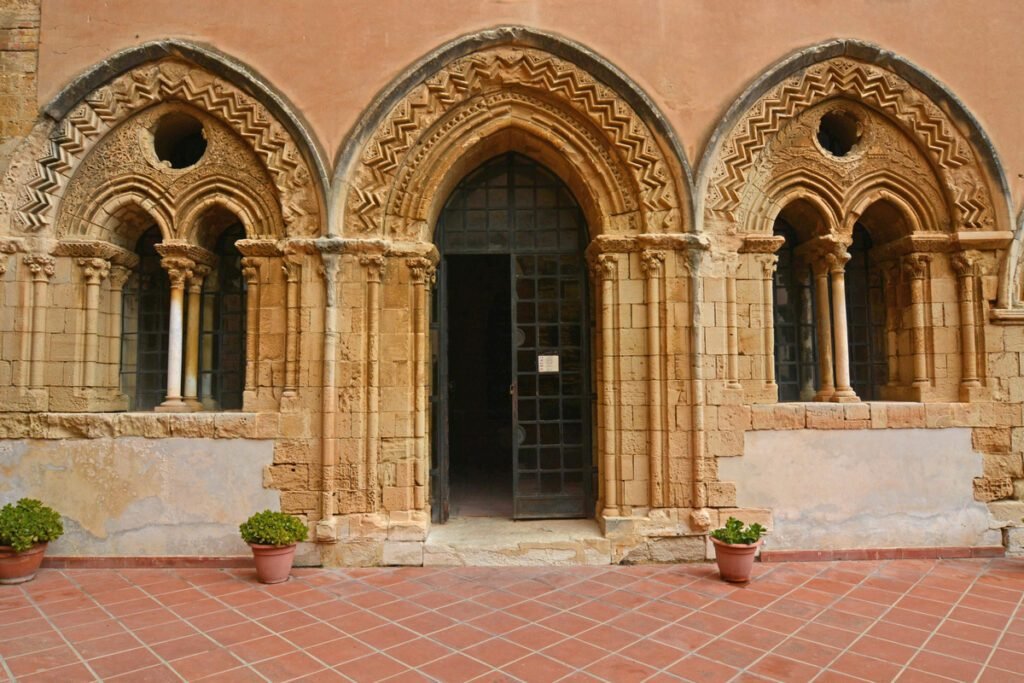
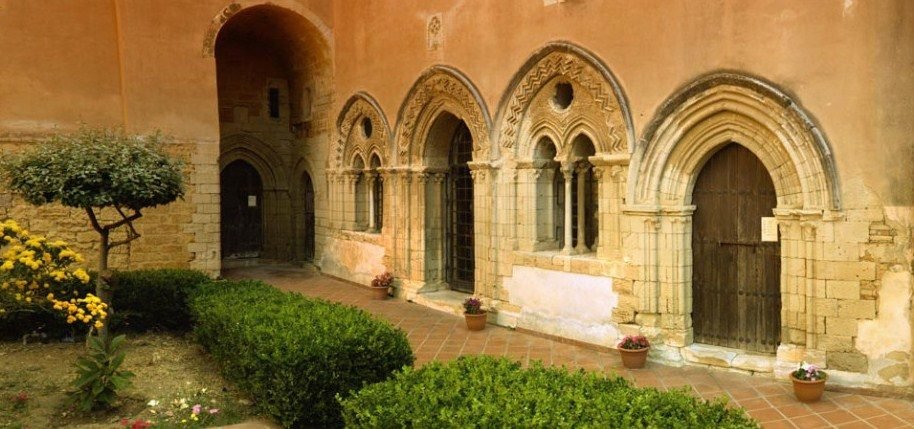
A medieval convent just off Via Atenea, still home to a small community of cloistered Cistercian nuns living behind a Baroque, stucco-decorated church. Agrigentines call it the Batia Grande, the “big abbey,” and it has stood since around 1290, when the noblewoman Rosalia Prefoglio founded it, originally to teach local girls needlework and embroidery.
Part of the complex today houses a wing of the civic museum, with frescoed rooms, a 15th-century wooden crucifix, and an ethnographic collection of everyday 19th-century Sicilian life upstairs. But it is the nuns still living behind the cloister wall, not the museum, that most visitors come for.
The Cuscus Dolce
Behind that wall, the nuns bake cuscus dolce, a sweet pistachio couscous found nowhere else in Sicily, to a recipe none of them has ever written down or shared outside the convent. Durum wheat semolina is hand-rolled into tiny grains, dried, then steamed in a traditional cuscussiera before being folded through with pistachios, toasted almonds, cinnamon, candied squash, and dark chocolate.
It began, the story goes, as a Christmas dish, and the secrecy around it is genuine: even Agrigento's own food writers describe the recipe as guessed at rather than known. The novelist Leonardo Sciascia, born up the road in Racalmuto, loved it enough to hand out jars of it as gifts for years.
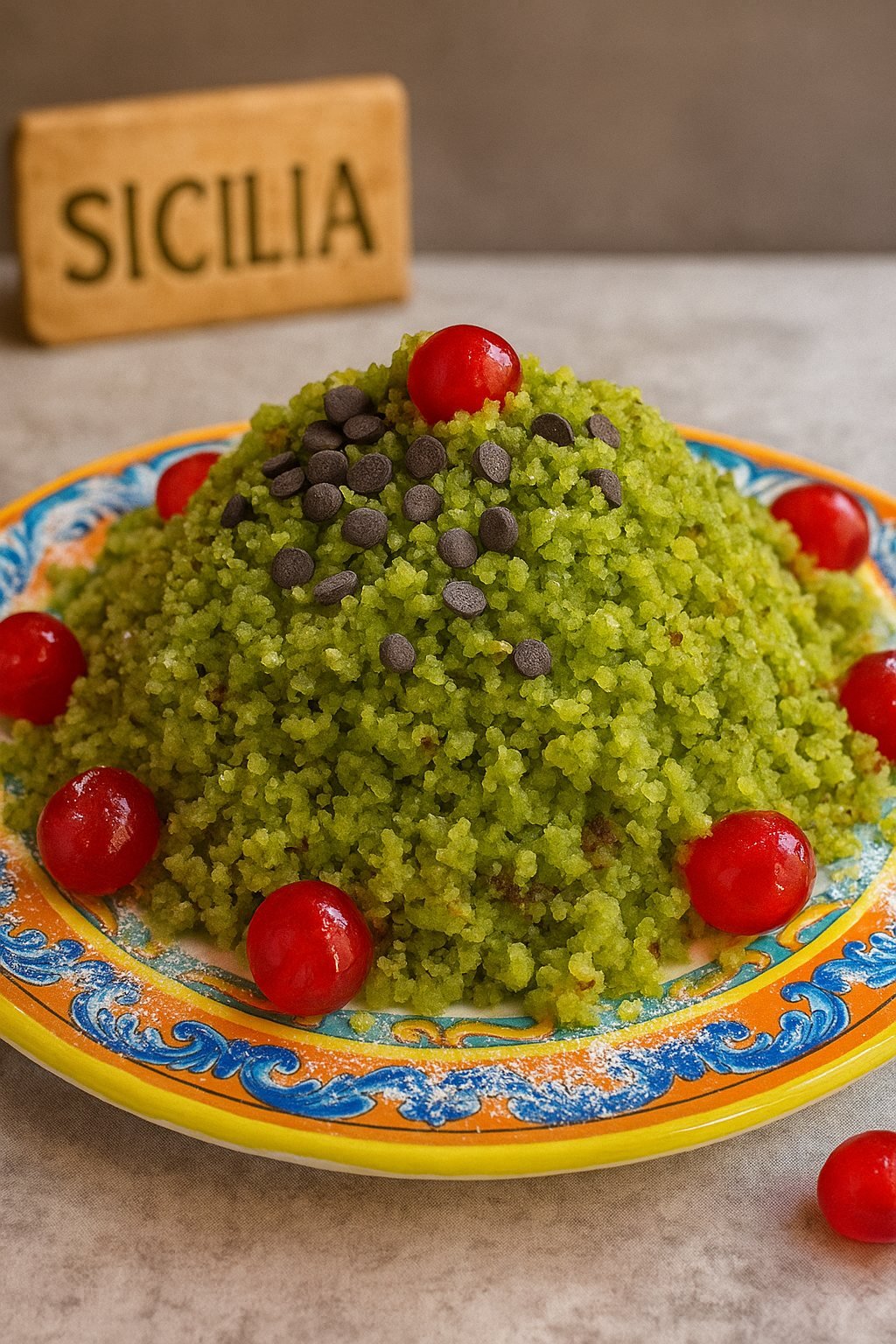 The finished cuscus dolce, studded with pistachios, chocolate, and candied fruit
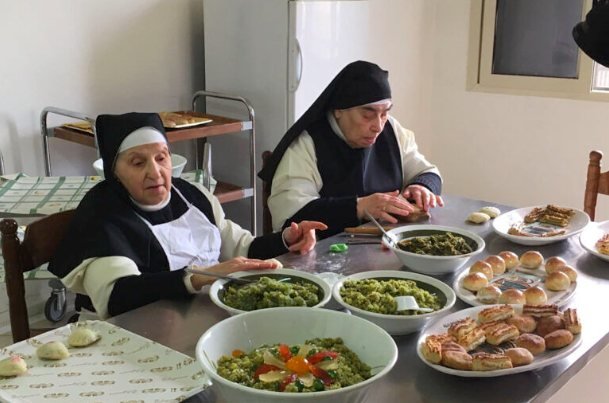 Nuns of the convent preparing a batch by hand
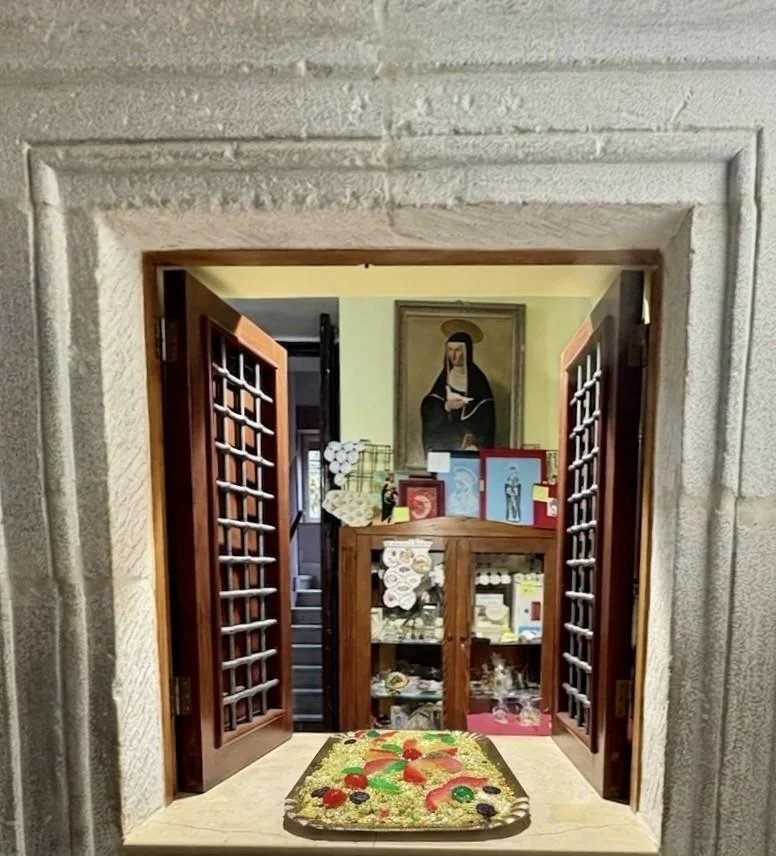 Passed out through the convent's small turnstile window